


January 3: The Raid That Shocked the Hemisphere
In the early hours of January 3, 2026, the United States launched a high-intensity military operation inside Venezuela aimed at capturing President Nicolás Maduro and his wife, Cilia Flores. According to U.S. officials, the strike involved air and ground components that quickly overwhelmed Venezuelan defenses. Maduro and Flores were taken into U.S. custody and flown out of the country, marking a dramatic escalation in U.S.–Venezuela tensions.
The Pentagon’s announcement, confirmed by President Donald Trump, described the operation as a decisive action against what the U.S. government labeled a regime tied to narcotics trafficking and authoritarian rule. Maduro and his wife were reportedly transported toward the United States under U.S. control.
Venezuelan officials denounced the strikes as a blatant violation of their sovereignty, with smoke seen rising over parts of Caracas and explosions reported across military areas.
Immediate Aftermath: U.S. Statements and Domestic Impact
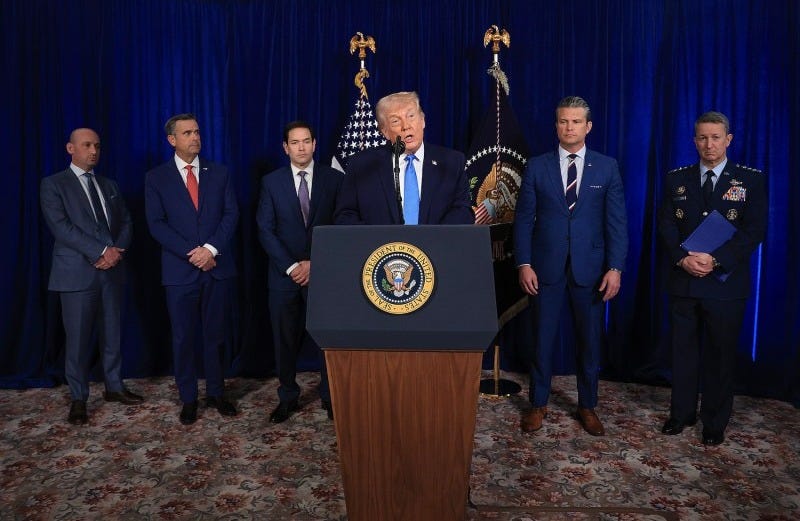
President Trump publicly addressed the operation, framing it as a success and asserting that Maduro would face American justice for alleged criminal charges. Trump indicated that U.S. involvement would continue as authorities managed Venezuela’s transition.
The operation, while swift, wasn’t without human cost: civilian casualties were reported in Venezuelan neighborhoods, underlining the risks of high-intensity strikes in urban areas.
International Reactions: Support, Condemnation, and Legal Debate
The U.S. action drew divided global responses. Some governments condemned the strike as a violation of international law and Venezuelan sovereignty, urging respect for diplomatic norms. Others welcomed the end of Maduro’s rule or adopted a more nuanced stance.
International organizations and rights groups raised concerns over the legality of the intervention and potential consequences for regional stability, highlighting the broader geopolitical implications.
Political Transition Inside Venezuela
Within days, Venezuela’s government structure shifted. Vice President Delcy Rodríguez took on an interim leadership role amid constitutional uncertainty, striving to maintain state functions and negotiate a way forward. Discussions over national unity and governance were complicated by internal divisions and external pressure.
Political analysts noted the narrative battle within Venezuela’s political class, with factions trying to either resist or adapt to U.S. influence, reflecting the intense struggle over legitimacy and control.
Maduro’s Legal Fate: U.S. Prosecution Begins
Following his capture, Maduro and Flores were transported to U.S. jurisdiction to face criminal charges, especially related to narcotics and organized crime. Court proceedings in New York have commenced, with legal teams mounting defenses and the U.S. Justice Department prosecuting on longstanding indictments.
The legal process represents a sharp shift from diplomacy to law enforcement as the method for addressing Maduro’s alleged crimes, even as questions about international law and sovereignty persist.
Broader Military Campaign and Strategic Moves
In the days following the Maduro capture, the U.S. military continued operations linked to its broader anti-narcotics and security strategy in the region. This included strikes on suspected drug-trafficking vessels, reflecting the administration’s narrative tying the Venezuelan regime to drug routes.
Additionally, U.S. forces intercepted Venezuela-linked oil tankers in regional waters, highlighting strategic control over energy logistics during the transition period.
U.S. Domestic Politics: War Powers and Congressional Debate
The Venezuelan operation sparked debate inside the United States over presidential war powers. Recent votes in the House of Representatives saw efforts to restrict future unilateral military actions, a push that ultimately failed, underscoring continuing partisan divides over foreign policy authority.
Polls indicated American public opinion is sharply split on the intervention, with many supporting the removal of Maduro but wary of prolonged American involvement or direct governance of Venezuela.
What’s Next: Venezuela’s Future Uncertain
As the initial week following January 3 drew to a close, Venezuela stood at a crossroads. The country’s political structure, economy, and international relationships are all in flux, with debates heating up over whether the U.S. will help facilitate a democratic transition, assume control over key sectors like oil, or face backlash for its interventionist approach.
The coming weeks are likely to shape a new chapter in Venezuelan history — one influenced by judicial processes, regional diplomacy, and the responses of both Venezuelan citizens and global powers.
Interesting situation, hope times turn for the better